
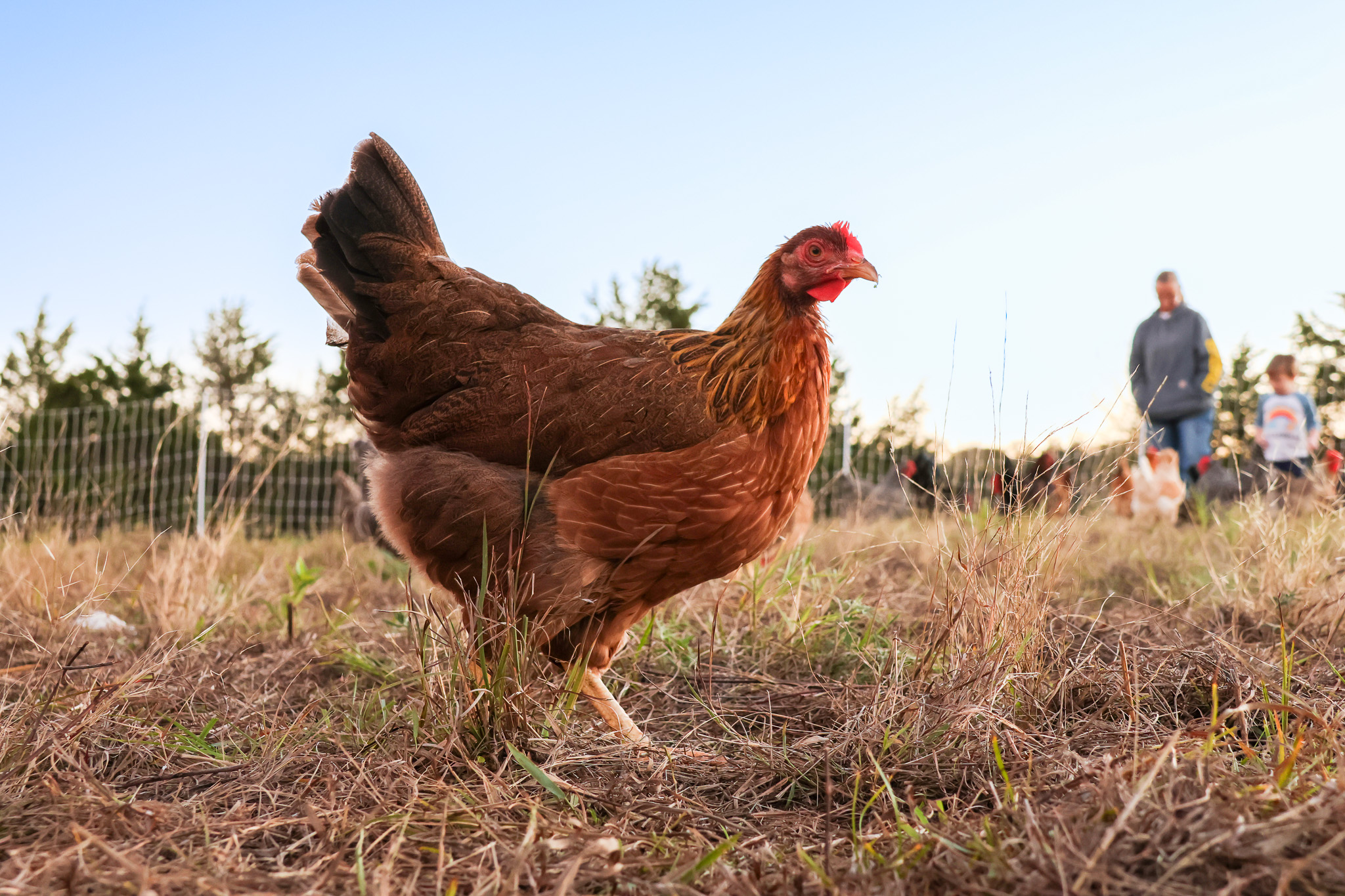
Regenerative Farming at Copper Branch Farm
Out here on our farm in North Texas, the choices we make every day aren’t just about raising chickens or tending to garden rows—they’re about doing right by the land, our community, and future generations. At Copper Branch Farm, we believe food should be grown in a way that works with nature, not against it. That’s why we’ve committed to regenerative farming practices.
If you’ve been following along with what we’re building here, you know we don’t take shortcuts. We’re out here digging post holes by hand, rotating chickens through fresh pasture, building up our soil one wheelbarrow of compost at a time—not because it’s trendy, but because it’s right. And honestly, it just makes sense.
The Problem with Conventional Farming
Most of the food you’ll find on grocery store shelves today is grown through a method called conventional agriculture. The focus is on yield—getting as much product as possible from the land, year after year. But that comes at a cost. This kind of farming takes more from the earth than it gives back. Over time, it strips the soil of life and nutrients, leading to poor crop health and increased dependence on synthetic fertilizers and pesticides.
The more the land is worn out, the more natural habitats get cleared to make room for more farming. This cycle reduces biodiversity and harms freshwater and marine ecosystems. The ripple effects reach all the way to our health, our climate, and our ability to keep feeding our families long-term (The Nature Conservancy, 2023a).
On a larger scope, the food system is responsible for about one-third of greenhouse gas emissions, 70% of all freshwater use, and 90% of tropical deforestation (The Nature Conservancy, 2023b). That’s not sustainable—not for the earth, and not for us.
The Regenerative Difference
Regenerative agriculture is a return to natural rhythms. It’s about producing high-quality food while building soil, restoring ecosystems, and encouraging biodiversity.
Here are the seven principles that guide our farming practices at Copper Branch:
- Soil Health First
Everything starts with the soil. Healthy soil is full of life—it holds water better, grows stronger plants, and supports animals in a way that creates a thriving ecosystem. That’s why we’re constantly adding compost, rotating pastures, and protecting our topsoil. - Minimize Disturbance
Tilling breaks up soil structure and disrupts the microbes that help plants grow. We use low- or no-till methods to keep those little soil critters happy and our organic matter intact. - Encourage Plant Diversity
Nature doesn’t grow in rows of one thing, and neither do we. By planting a wide range of crops and allowing wildflowers and herbs to flourish, we feed the soil, attract pollinators, and invite beneficial insects to help manage pests the natural way. - Integrate Livestock
Our pasture-raised chickens aren’t just here to lay eggs or make delicious meat—they’re a key part of our farm ecosystem. Their manure fertilizes the soil, and their scratching keeps weeds down. We move them regularly to avoid excessive impact and give the land time to recover. - Use Cover Crops
Between planting seasons, we grow crops just to nourish the soil. These cover crops prevent erosion, crowd out weeds, and restore vital nutrients. It’s a natural alternative to synthetic fertilizers and herbicides. - Water Management
Healthy soil acts like a sponge, soaking up rain and holding onto it longer. That’s good news for us in Texas, where droughts can hit hard. It also means we’re using less water overall. - Carbon Sequestration
One of the most exciting benefits of regenerative farming is that it pulls carbon out of the atmosphere and stores it in the soil. Healthier soil means more organic matter—and that means more carbon being drawn down naturally (What Is Regenerative Agriculture, And How Does It Work?, n.d.). That’s real impact.
A Healthier Future, Together
At the end of the day, regenerative farming isn’t just about technique—it’s about stewardship. It’s about taking care of what we’ve been given so we can feed our families well and leave this land better than we found it.
When you buy from Copper Branch Farm, you’re not just getting pasture-raised chicken or fresh produce—you’re investing in a food system that honors the land, supports your health, and strengthens our community.
Thanks for being part of this with us.
-Jennifer and Cody
References
The Nature Conservancy. (2023a). Transforming agriculture to unleash the regenerative power of nature. https://www.nature.org/en-us/about-us/where-we-work/latin-america/stories-in-latin-america/transforming-agriculture-to-unleash-the-regenerative-power-of-na/
The Nature Conservancy. (2023b). Regenerative food systems. https://www.nature.org/en-us/what-we-do/our-priorities/provide-food-and-water-sustainably/food-and-water-stories/regenerative-food-systems/What Is Regenerative Agriculture, And How Does It Work? (n.d.). Regeneration International. https://regenerationinternational.org/2020/06/16/what-is-regenerative-agriculture-and-how-does-it-work/